
Outdoor Wi-Fi Base-Client Station for Long-Range Connectivity
Real-time Object Detection, Tracking & Smart Video Analytics on the Edge
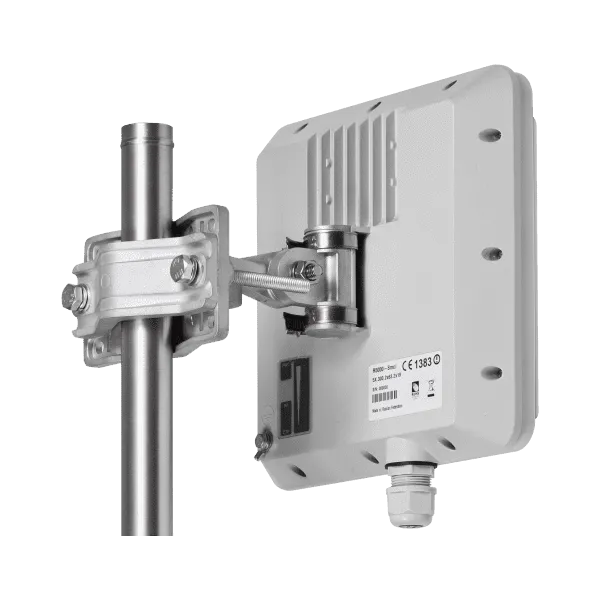
Developed professional outdoor Wi-Fi Base-Client station system for long-range internet distribution. The Base Station connects to the internet via fiber or Ethernet and transmits a stable wireless signal to multiple Client Stations kilometers away. The system uses high-power wireless modules (up to 24 dB), supports PoE/PoE++ power, and operates on custom OpenWRT firmware with optimized drivers. Designed for high reliability in industrial and urban environments.
Project Summary
4K imaging with Sony IMX and hardware H.265/H.264 encoding
Optimized Buildroot firmware with custom V4L drivers
Low-power architecture (<10 W) with stable thermal and electrical performance
Full-cycle development: 10-layer HDI PCB, firmware, mechanics, and mass-production support
Full-cycle R&D
In-house laboratory
100% Job Success
(Upwork & Linkedin)
(Upwork & Linkedin)
Project Overview
Outdoor WiFi Base station for client networks is a device that allows multiple Client stations to connect to a wireless network. The Wi-Fi base station acts as a hub for the wireless connections, and it is connected to a larger network, such as the internet, through a wired connection. Standard PCI and PCI Express radio modules are used to connect to a radio environment with different frequency ranges.
The Wi-Fi base station for client networks unites a router and an wireless access point, which is responsible for transmitting the Wi-Fi signal. The router manages the connections between the clients and the internet.
A Wi-Fi client station is a device that allows a user to connect to a Wi-Fi network wirelessly. The Wi-Fi Client station is used to connect to a Wi-Fi base station, which acts as a hub for the wireless connections. The Wi-Fi Client station is responsible for receiving the Wi-Fi signal from the base station and transmitting data back to the network.
The Wi-Fi Base station is connected to a larger network, such as the internet, through a wired connection. The Wi-Fi Client station is connected wirelessly to the base station, and it relies on the base station to route its traffic to the internet or other network resources.
This type of WiFi stations is often used in homes, small offices, and public spaces to provide a convenient and wireless connection to the internet or other network resources. By connecting to the Wi-Fi base station, clients can access the internet and other network resources.
The Wi-Fi base station for client networks unites a router and an wireless access point, which is responsible for transmitting the Wi-Fi signal. The router manages the connections between the clients and the internet.
A Wi-Fi client station is a device that allows a user to connect to a Wi-Fi network wirelessly. The Wi-Fi Client station is used to connect to a Wi-Fi base station, which acts as a hub for the wireless connections. The Wi-Fi Client station is responsible for receiving the Wi-Fi signal from the base station and transmitting data back to the network.
The Wi-Fi Base station is connected to a larger network, such as the internet, through a wired connection. The Wi-Fi Client station is connected wirelessly to the base station, and it relies on the base station to route its traffic to the internet or other network resources.
This type of WiFi stations is often used in homes, small offices, and public spaces to provide a convenient and wireless connection to the internet or other network resources. By connecting to the Wi-Fi base station, clients can access the internet and other network resources.


Our Solution
✅ OUR WORK:
▪️ Schematic and PCB design
▪️ Sample making (PCB)
▪️ Porting of the Linux kernel (OpenWRT), device tree and drivers
▪️ Software Development for Testing
▪️ Electronic bring-up and testing
▪️ Mass production support
▪️ Schematic and PCB design
▪️ Sample making (PCB)
▪️ Porting of the Linux kernel (OpenWRT), device tree and drivers
▪️ Software Development for Testing
▪️ Electronic bring-up and testing
▪️ Mass production support
🚀 BASE STATION
✅ INTERFACES:
▪️ CPU – Marvell 88F6820
▪️ 2 x DDR3 128Mb
▪️ 2 x Mini PCI or PCI Express mini for wireless cards
▪️ 2 x Gigabit Ethernet.
▪️ 1 x SFP for fiber modules
▪️ PoE++ up to 60W
✅ PCB:
▪️ Stackup – 8 layers
▪️ PCB – 1500+ components
▪️ 5000+ pads
▪️ 6000+ vias
✅ INTERFACES:
▪️ CPU – Marvell 88F6820
▪️ 2 x DDR3 128Mb
▪️ 2 x Mini PCI or PCI Express mini for wireless cards
▪️ 2 x Gigabit Ethernet.
▪️ 1 x SFP for fiber modules
▪️ PoE++ up to 60W
✅ PCB:
▪️ Stackup – 8 layers
▪️ PCB – 1500+ components
▪️ 5000+ pads
▪️ 6000+ vias
🚀 CLIENT STATION
✅ INTERFACES:
▪️ CPU – Broadcom BCM53015A1
▪️ 1 x DDR3 64Mb
▪️ 1 x Wireless – Atheros QCA9898
▪️ Output power up to 24dB
▪️ 1 x Gigabit Ethernet
▪️ PoE+ 25W. Input voltage from 9V to 60V for different power supplys
✅ PCB:
▪️ Stackup – 6 layers
▪️ PCB – 1000+ components
▪️ 3000+ pads
▪️ 4500+ vias
✅ INTERFACES:
▪️ CPU – Broadcom BCM53015A1
▪️ 1 x DDR3 64Mb
▪️ 1 x Wireless – Atheros QCA9898
▪️ Output power up to 24dB
▪️ 1 x Gigabit Ethernet
▪️ PoE+ 25W. Input voltage from 9V to 60V for different power supplys
✅ PCB:
▪️ Stackup – 6 layers
▪️ PCB – 1000+ components
▪️ 3000+ pads
▪️ 4500+ vias