
Preferred Values (E-Series) in Electronics: What They Are and Why They Matter
Introduction
When designing electronic circuits, engineers rarely choose arbitrary component values. Instead, they rely on standardized preferred values, also known as E-series. These values define the commonly available resistor, capacitor, and inductor ratings used across the industry.
Understanding E-series is essential for practical circuit design, cost optimization, and component availability.
Understanding E-series is essential for practical circuit design, cost optimization, and component availability.
Preferred Values (E-Series) Calculator
Find the nearest IEC standard nominal value for resistors, capacitors, and inductors.
How to Use the E-Series Calculator
Use this tool to quickly find the nearest standard IEC value for your component.
Step-by-step:
1. Enter target value
Input the desired resistance, capacitance, or inductance.
2. Select component type
Resistor, capacitor, or inductor — this affects unit scaling.
3. Choose E-series
• E12 / E24 → general use
• E48 / E96 / E192 → precision applications
4. Review results
• The calculator shows:
• nearest standard value
• lower and higher options
deviation in %
5. Pick the best option
• use nearest for most cases
• use lower/higher if circuit requires bias or margin
Step-by-step:
1. Enter target value
Input the desired resistance, capacitance, or inductance.
2. Select component type
Resistor, capacitor, or inductor — this affects unit scaling.
3. Choose E-series
• E12 / E24 → general use
• E48 / E96 / E192 → precision applications
4. Review results
• The calculator shows:
• nearest standard value
• lower and higher options
deviation in %
5. Pick the best option
• use nearest for most cases
• use lower/higher if circuit requires bias or margin
Need help with your electronics design?
Choosing the right component values is only one part of the system. We design complete hardware solutions — from schematics to production-ready boards.
- AI vision cameras and embedded systems
- Custom carrier boards for NVIDIA Jetson
- Analog and power circuit design
- Full-cycle hardware development
Table of E-series E3, E6, E12, E24
Preferred values per decade from 1.0 to 9.1
| Base Value | E3 ±30% |
E6 ±20% |
E12 ±10% |
E24 ±5% |
|---|---|---|---|---|
| 1.0 | 1.0 | 1.0 | 1.0 | 1.0 |
| 1.1 | — | — | — | 1.1 |
| 1.2 | — | — | 1.2 | 1.2 |
| 1.3 | — | — | — | 1.3 |
| 1.5 | 1.5 | 1.5 | 1.5 | 1.5 |
| 1.6 | — | — | — | 1.6 |
| 1.8 | — | — | 1.8 | 1.8 |
| 2.0 | — | — | — | 2.0 |
| 2.2 | 2.2 | 2.2 | 2.2 | 2.2 |
| 2.4 | — | — | — | 2.4 |
| 2.7 | — | 2.7 | 2.7 | 2.7 |
| 3.0 | — | — | — | 3.0 |
| 3.3 | 3.3 | 3.3 | 3.3 | 3.3 |
| 3.6 | — | — | — | 3.6 |
| 3.9 | — | — | 3.9 | 3.9 |
| 4.3 | — | — | — | 4.3 |
| 4.7 | 4.7 | 4.7 | 4.7 | 4.7 |
| 5.1 | — | — | — | 5.1 |
| 5.6 | — | — | 5.6 | 5.6 |
| 6.2 | — | — | — | 6.2 |
| 6.8 | 6.8 | 6.8 | 6.8 | 6.8 |
| 7.5 | — | — | — | 7.5 |
| 8.2 | — | — | 8.2 | 8.2 |
| 9.1 | — | — | — | 9.1 |
Table of E-series E48, E96, E192
Preferred values per decade for E48 / E96 / E192
| E48 | E96 | E192 | E48 | E96 | E192 | E48 | E96 | E192 | E48 | E96 | E192 | E48 | E96 | E192 | E48 | E96 | E192 |
|---|---|---|---|---|---|---|---|---|---|---|---|---|---|---|---|---|---|
| 1.00 | 1.00 | 1.00 | 1.47 | 1.47 | 1.47 | 2.15 | 2.15 | 2.15 | 3.16 | 3.16 | 3.16 | 4.64 | 4.64 | 4.64 | 6.81 | 6.81 | 6.81 |
| — | — | 1.01 | — | — | 1.49 | — | — | 2.18 | — | — | 3.20 | — | — | 4.70 | — | — | 6.90 |
| 1.05 | 1.02 | 1.02 | 1.54 | 1.50 | 1.50 | 2.26 | 2.21 | 2.21 | 3.32 | 3.24 | 3.24 | 4.87 | 4.75 | 4.75 | 7.15 | 6.98 | 6.98 |
| — | — | 1.04 | — | — | 1.52 | — | — | 2.23 | — | — | 3.28 | — | — | 4.81 | — | — | 7.06 |
| 1.10 | 1.05 | 1.05 | 1.62 | 1.54 | 1.54 | 2.37 | 2.26 | 2.26 | 3.48 | 3.32 | 3.32 | 5.11 | 4.87 | 4.87 | 7.50 | 7.15 | 7.15 |
| — | — | 1.06 | — | — | 1.56 | — | — | 2.29 | — | — | 3.36 | — | — | 4.93 | — | — | 7.23 |
| 1.15 | 1.07 | 1.07 | 1.69 | 1.58 | 1.58 | 2.49 | 2.32 | 2.32 | 3.65 | 3.40 | 3.40 | 5.36 | 4.99 | 4.99 | 7.87 | 7.32 | 7.32 |
| — | — | 1.09 | — | — | 1.60 | — | — | 2.34 | — | — | 3.44 | — | — | 5.05 | — | — | 7.41 |
| 1.21 | 1.13 | 1.13 | 1.78 | 1.65 | 1.65 | 2.61 | 2.43 | 2.43 | 3.83 | 3.57 | 3.57 | 5.62 | 5.23 | 5.23 | 8.25 | 7.68 | 7.68 |
| — | — | 1.14 | — | — | 1.67 | — | — | 2.46 | — | — | 3.61 | — | — | 5.30 | — | — | 7.77 |
| 1.27 | 1.18 | 1.18 | 1.87 | 1.74 | 1.74 | 2.74 | 2.55 | 2.55 | 4.02 | 3.74 | 3.74 | 5.90 | 5.49 | 5.49 | 8.66 | 8.06 | 8.06 |
| — | — | 1.20 | — | — | 1.76 | — | — | 2.58 | — | — | 3.79 | — | — | 5.56 | — | — | 8.16 |
| 1.33 | 1.21 | 1.21 | 1.96 | 1.78 | 1.78 | 2.87 | 2.61 | 2.61 | 4.22 | 3.83 | 3.83 | 6.19 | 5.62 | 5.62 | 9.09 | 8.25 | 8.25 |
| — | — | 1.23 | — | — | 1.80 | — | — | 2.64 | — | — | 3.88 | — | — | 5.69 | — | — | 8.35 |
| 1.40 | 1.24 | 1.24 | 2.05 | 1.82 | 1.82 | 3.01 | 2.67 | 2.67 | 4.42 | 3.92 | 3.92 | 6.49 | 5.76 | 5.76 | 9.53 | 8.45 | 8.45 |
| — | — | 1.26 | — | — | 1.84 | — | — | 2.71 | — | — | 3.97 | — | — | 5.83 | — | — | 8.56 |
| 1.47 | 1.30 | 1.30 | 2.15 | 1.91 | 1.91 | 3.16 | 2.80 | 2.80 | 4.64 | 4.12 | 4.12 | 6.81 | 6.04 | 6.04 | — | 8.87 | 8.87 |
| — | — | 1.32 | — | — | 1.93 | — | — | 2.84 | — | — | 4.17 | — | — | 6.12 | — | — | 8.98 |
| — | 1.37 | 1.37 | — | 2.00 | 2.00 | — | 2.94 | 2.94 | — | 4.32 | 4.32 | — | 6.34 | 6.34 | — | 9.31 | 9.31 |
| — | — | 1.38 | — | — | 2.03 | — | — | 2.98 | — | — | 4.37 | — | — | 6.42 | — | — | 9.42 |
| — | 1.43 | 1.43 | — | 2.10 | 2.10 | — | 3.09 | 3.09 | — | 4.53 | 4.53 | — | 6.65 | 6.65 | — | 9.76 | 9.76 |
| — | — | 1.45 | — | — | 2.13 | — | — | 3.12 | — | — | 4.59 | — | — | 6.73 | — | — | 9.88 |
| — | — | 1.49 | — | — | 2.18 | — | — | 3.20 | — | — | 4.70 | — | — | 6.90 | — | — | — |
| — | — | 1.52 | — | — | 2.23 | — | — | 3.28 | — | — | 4.81 | — | — | 7.06 | — | — | — |
| — | — | 1.56 | — | — | 2.29 | — | — | 3.36 | — | — | 4.93 | — | — | 7.23 | — | — | — |
| — | — | 1.60 | — | — | 2.34 | — | — | 3.44 | — | — | 5.05 | — | — | 7.41 | — | — | — |
| — | — | 1.64 | — | — | 2.40 | — | — | 3.52 | — | — | 5.17 | — | — | 7.59 | — | — | — |
| — | — | 1.67 | — | — | 2.46 | — | — | 3.61 | — | — | 5.30 | — | — | 7.77 | — | — | — |
| — | — | 1.72 | — | — | 2.52 | — | — | 3.70 | — | — | 5.42 | — | — | 7.96 | — | — | — |
| — | — | 1.76 | — | — | 2.58 | — | — | 3.79 | — | — | 5.56 | — | — | 8.16 | — | — | — |
| — | — | 1.80 | — | — | 2.64 | — | — | 3.88 | — | — | 5.69 | — | — | 8.35 | — | — | — |
| — | — | 1.84 | — | — | 2.71 | — | — | 3.97 | — | — | 5.83 | — | — | 8.56 | — | — | — |
| — | — | 1.89 | — | — | 2.77 | — | — | 4.07 | — | — | 5.97 | — | — | 8.76 | — | — | — |
| — | — | 1.93 | — | — | 2.84 | — | — | 4.17 | — | — | 6.12 | — | — | 8.98 | — | — | — |
| — | — | 1.98 | — | — | 2.91 | — | — | 4.27 | — | — | 6.26 | — | — | 9.20 | — | — | — |
| — | — | 2.03 | — | — | 2.98 | — | — | 4.37 | — | — | 6.42 | — | — | 9.42 | — | — | — |
| — | — | 2.08 | — | — | 3.05 | — | — | 4.48 | — | — | 6.57 | — | — | 9.65 | — | — | — |
| — | — | 2.13 | — | — | 3.12 | — | — | 4.59 | — | — | 6.73 | — | — | 9.88 | — | — | — |
What Are Preferred Values?
Preferred values are logarithmically spaced standard component values that cover each order of magnitude (decade), such as:
• 1 → 10
• 10 → 100
• 100 → 1,000
Instead of having infinite possible values, components are manufactured only at specific points within each decade.
For example:
1.0, 1.2, 1.5, 1.8, 2.2, 2.7, 3.3, 3.9, 4.7, 5.6, 6.8, 8.2
These values repeat across scales:
10, 12, 15, 18, 22, 27…
100, 120, 150, 180, 220…
• 1 → 10
• 10 → 100
• 100 → 1,000
Instead of having infinite possible values, components are manufactured only at specific points within each decade.
For example:
1.0, 1.2, 1.5, 1.8, 2.2, 2.7, 3.3, 3.9, 4.7, 5.6, 6.8, 8.2
These values repeat across scales:
10, 12, 15, 18, 22, 27…
100, 120, 150, 180, 220…
Why Preferred Values Exist
1. Manufacturing Efficiency
Producing every possible value is impractical. Standardization reduces complexity and cost.
2. Component Availability
Using standard values ensures components are widely available from distributors like DigiKey or Mouser.
3. Design Consistency
Engineers worldwide design using the same value sets, making circuits easier to reproduce and maintain.
4. Optimal Coverage
Logarithmic spacing ensures uniform relative accuracy across the full range.
Producing every possible value is impractical. Standardization reduces complexity and cost.
2. Component Availability
Using standard values ensures components are widely available from distributors like DigiKey or Mouser.
3. Design Consistency
Engineers worldwide design using the same value sets, making circuits easier to reproduce and maintain.
4. Optimal Coverage
Logarithmic spacing ensures uniform relative accuracy across the full range.
The E-Series System
E-series are defined by how many values exist per decade.
E6 (±20%)
• 6 values per decade
• Basic, low-precision applications
E12 (±10%)
• 12 values
• Common in simple electronics
E24 (±5%)
• 24 values
• Widely used in engineering practice
E48 / E96 / E192 (High Precision)
• E48 → ±2%
• E96 → ±1%
• E192 → ±0.5% and better
Used in:
• Analog circuits
• RF systems
• Precision measurements
E6 (±20%)
• 6 values per decade
• Basic, low-precision applications
E12 (±10%)
• 12 values
• Common in simple electronics
E24 (±5%)
• 24 values
• Widely used in engineering practice
E48 / E96 / E192 (High Precision)
• E48 → ±2%
• E96 → ±1%
• E192 → ±0.5% and better
Used in:
• Analog circuits
• RF systems
• Precision measurements
How It Works (Conceptually)
Each series divides a decade using a geometric progression:
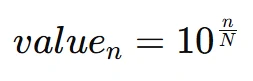
Where:
• ( N ) = number of values in the series (e.g., 24 for E24)
• ( n ) = index of the value
This ensures that the relative spacing between values matches the tolerance.
• ( N ) = number of values in the series (e.g., 24 for E24)
• ( n ) = index of the value
This ensures that the relative spacing between values matches the tolerance.
Practical Example
Practical Example
Let’s say you need a resistor around 11 kΩ:
• E12 → not available → choose 10k or 12k
• E24 → 11k exists
• E96 → 11.0k, 11.3k, etc.
Higher series → more precise selection → less design error
Let’s say you need a resistor around 11 kΩ:
• E12 → not available → choose 10k or 12k
• E24 → 11k exists
• E96 → 11.0k, 11.3k, etc.
Higher series → more precise selection → less design error
When to Use Each Series
| E-Series | Values per Decade | Tolerance | Description | Typical Use |
|---|---|---|---|---|
| E6 | 6 | ±20% | Very coarse value set | Basic power circuits, rough designs |
| E12 | 12 | ±10% | Standard consumer electronics | General-purpose designs |
| E24 | 24 | ±5% | Most widely used engineering set | Pull-ups, dividers, digital circuits |
| E48 | 48 | ±2% | Medium precision | Analog front-end, filtering |
| E96 | 96 | ±1% | High precision | Signal conditioning, ADC, reference circuits |
| E192 | 192 | ±0.5% | Very high precision | RF, instrumentation, precision dividers |
Key Takeaway
Preferred values are not just a convenience — they are a core engineering standard that balances:
• precision
• manufacturability
• availability
Using the right E-series helps you design circuits that are practical, scalable, and production-ready.
• precision
• manufacturability
• availability
Using the right E-series helps you design circuits that are practical, scalable, and production-ready.
FAQ
What are E-series values?
E-series are standardized component values defined by IEC that follow a logarithmic scale to ensure uniform tolerance coverage across decades.
Why not use any arbitrary value?
Because real components are manufactured only in standard values. Using E-series ensures availability, cost efficiency, and compatibility.
Why are values logarithmic?
Because tolerance is relative (±%). Logarithmic spacing keeps error consistent across the full range.
Which E-series should I use?
• E12 / E24 → digital circuits, pull-ups, power
• E48 / E96 → analog circuits, filters
• E192 → precision, RF, measurement systems
What does “per decade” mean?
Each series repeats between 1–10, then scales:
• 10–100
• 100–1000
• etc.
Example:
1.2 → 12 → 120 → 1.2k → 12k
When should I avoid nearest value?
When the exact ratio matters:
• voltage dividers
• gain stages
• reference circuits
In those cases, choose a value that preserves the required ratio.
Why do some values look “strange” (e.g. 3.57, 6.49)?
These are mathematically derived to evenly distribute values across the decade for precise tolerance matching.
E24 vs E96 — practical difference?
• E24 → faster design, fewer parts
• E96 → higher accuracy, better matchingCan I combine resistors to get exact value?
Yes:
• series → increase value
• parallel → decrease value
This is common when exact E-series value is not available.
E-series are standardized component values defined by IEC that follow a logarithmic scale to ensure uniform tolerance coverage across decades.
Why not use any arbitrary value?
Because real components are manufactured only in standard values. Using E-series ensures availability, cost efficiency, and compatibility.
Why are values logarithmic?
Because tolerance is relative (±%). Logarithmic spacing keeps error consistent across the full range.
Which E-series should I use?
• E12 / E24 → digital circuits, pull-ups, power
• E48 / E96 → analog circuits, filters
• E192 → precision, RF, measurement systems
What does “per decade” mean?
Each series repeats between 1–10, then scales:
• 10–100
• 100–1000
• etc.
Example:
1.2 → 12 → 120 → 1.2k → 12k
When should I avoid nearest value?
When the exact ratio matters:
• voltage dividers
• gain stages
• reference circuits
In those cases, choose a value that preserves the required ratio.
Why do some values look “strange” (e.g. 3.57, 6.49)?
These are mathematically derived to evenly distribute values across the decade for precise tolerance matching.
E24 vs E96 — practical difference?
• E24 → faster design, fewer parts
• E96 → higher accuracy, better matchingCan I combine resistors to get exact value?
Yes:
• series → increase value
• parallel → decrease value
This is common when exact E-series value is not available.
Need help with your electronics design?
Choosing the right component values is only one part of the system. We design complete hardware solutions — from schematics to production-ready boards.
- AI vision cameras and embedded systems
- Custom carrier boards for NVIDIA Jetson
- Analog and power circuit design
- Full-cycle hardware development